
Key Takeaways
- A coupled HPA-metabolic ODE model successfully simulates stress-induced glucose dysregulation, bridging the gap between psychosocial stress and metabolic outcomes.
- The model is calibrated and individualized using UK Biobank data, showcasing its ability to capture population-level dynamics and individual variability in metabolic responses.
- It predicts distinct metabolic attractors, providing insights into the mechanisms underlying glycemic control and offering a framework for virtual trials and personalized interventions.
TL;DR
Type 2 Diabetes (T2D) is a complex metabolic disease influenced by stress, where the interplay between endocrine and glucose regulation remains poorly understood. Existing models often lack the ability to fully capture the dynamic interplay between the hypothalamic-pituitary-adrenal (HPA) axis, which mediates stress responses, and metabolic pathways, especially when considering the large-scale, heterogeneous data available from cohorts like the UK Biobank. A significant challenge is to develop a framework that can integrate psychosocial stress, its impact on cortisol levels, and subsequent effects on glucose homeostasis, while accounting for individual variability and avoiding oversimplified assumptions. This paper introduces a mechanistic ordinary differential equation (ODE) model that couples the HPA-axis with metabolic processes, including hepatic glucose production and peripheral insulin sensitivity. The model is calibrated using data from a UK Biobank pilot cohort (100 participants) to establish population-wide constants and then individualized to represent specific metabolic phenotypes by scaling factors. This approach allows the model to reproduce key clinical and biochemical observations and to predict the emergence of distinct metabolic attractors related to stress-induced glucose dysregulation, demonstrating its ability to simulate and explain complex physiological responses.
Why Does It Matter?
This paper offers a novel mechanistic framework for understanding Type 2 Diabetes (T2D) by integrating stress pathways and metabolic regulation. It provides a powerful tool for virtual trials and personalized medicine, allowing researchers to explore interventions and predict individual responses to stress-induced glucose dysregulation. The use of UK Biobank data for calibration and validation significantly enhances its real-world applicability and reinforces the potential for precision health approaches in metabolic disease management.
HPA-Metabolic Axis
The HPA-Metabolic Axis plays a crucial role in stress-induced glucose dysregulation, as highlighted by a mechanistic framework coupling the hypothalamic-pituitary-adrenal (HPA) axis with the glucose-insulin metabolic loop. This model, developed using UK Biobank data, demonstrates how stress, mediated by the HPA axis (CRH, ACTH, and cortisol), directly impacts hepatic glucose production (HGP) and peripheral insulin sensitivity (S_I). Elevated cortisol, for instance, significantly increases total glucose production. The research emphasizes that these interactions are not merely correlational but are deeply mechanistic, contributing to the development and progression of Type 2 Diabetes. The framework's ability to maintain distinct phenotypic attractors for healthy and diabetic individuals underscores its potential for personalized medicine, offering valuable insights into intervention strategies targeting both stress and metabolism for T2D prevention and management.
Data and Model
This research utilizes a coupled HPA-metabolic model to analyze stress-induced glucose dysregulation in Type 2 Diabetes, leveraging a rich dataset from the UK Biobank pilot cohort (50 healthy, 50 T2D individuals). The model incorporates 18 verifiable ordinary differential equations (ODEs) representing psychosocial stress, the HPA axis, and metabolic outcomes. Crucially, the approach includes individualized scaling based on baseline measurements and phenotype-specific parameter sets to improve accuracy, departing from traditional population-averaged models. Data preprocessing involves meticulous curation to handle missing values, while mechanistic manual refitting and a comprehensive statistical analysis confirm the model's validity and its ability to uncover complex interactions between psychosocial stress, the HPA axis, and glucose metabolism. This framework not only reveals clinically meaningful discrepancies but also offers a powerful tool for virtual trials and personalized interventions.
Model Validation
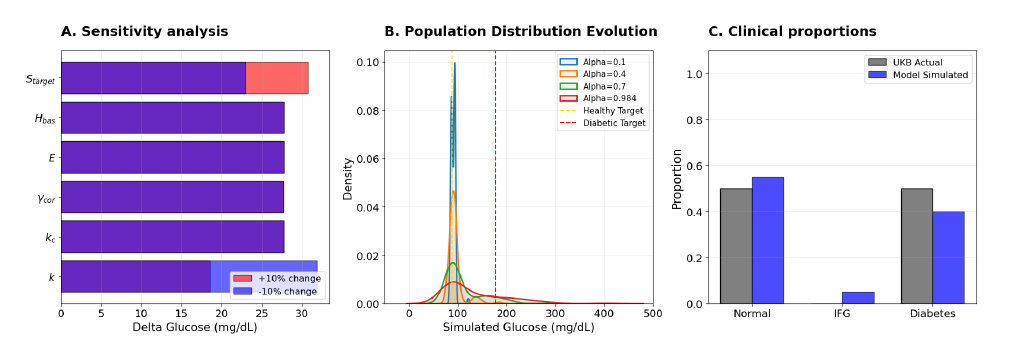
Model validation is crucial for establishing the reliability and applicability of the proposed HPA-metabolic framework. The paper meticulously details several validation steps: statistical parity and quantile analysis compare simulated and clinical data distributions, demonstrating strong agreement across various metrics like fasting glucose. Clinical classification accuracy evaluates the model's ability to categorize individuals into diagnostic bins (normal, pre-diabetic, diabetic) based on standard thresholds, showing high concordance with real-world observations. Mechanistic emergence of bimodality further validates the model's capacity to reproduce complex biological phenomena observed in Type 2 Diabetes. The use of a UK Biobank pilot cohort provides a robust, large-scale dataset for these comparisons. This multi-faceted validation approach significantly strengthens the model's credibility, ensuring it accurately reflects underlying biological mechanisms and clinical realities, thus enhancing its potential for real-world impact in understanding stress-induced glucose dysregulation.
Individualized Scaling
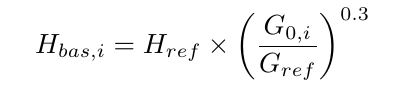
The concept of Individualized Scaling in this paper is crucial for understanding how a generalized mechanistic model of stress-induced glucose dysregulation can be tailored to individual patients. The authors utilize an individualized scaling framework anchored to baseline glucose uptake and hepatic production, which is derived from a 50-healthy and 50-T2D cohort. This framework allows the model to accurately reflect individual-specific physiological parameters and responses, moving beyond population-averaged statistics. By comparing individual simulation results with baseline and clinical glucose measurements, the framework validates its ability to capture personalized metabolic states. This patient-specific calibration is critical for clinical utility, enabling tailored interventions and personalized medicine. The paper emphasizes that while the underlying mechanistic model remains constant, individualized scaling ensures the model's output is relevant and accurate for each person, making it a powerful tool for understanding and managing Type 2 Diabetes.
Future Directions
Building upon the current mechanistic modeling of stress-induced glucose dysregulation in Type 2 Diabetes (T2D), future research should expand the model's complexity by incorporating additional relevant biomarkers and physiological pathways beyond the HPA axis, such as neuroinflammation or gut microbiome interactions, to provide a more holistic understanding of T2D pathogenesis. The current framework, while powerful for identifying individuals at risk, could be enhanced through dynamic and personalized interventions, exploring how real-time changes in stressors and metabolic parameters influence treatment efficacy. Further, longitudinal studies with larger and more diverse cohorts are essential to validate the model's predictive power across different demographics and to track the progression of stress-induced glucose dysregulation over extended periods. Investigating the model's applicability in pre-diabetic stages could also unlock opportunities for early intervention strategies. Finally, exploring the integration of advanced machine learning techniques with the mechanistic model could lead to more accurate risk prediction and personalized treatment recommendations.
More Figures (1)
Stay Updated with Our Research
Get notified when we publish new AI-analyzed papers and research insights:
Subscribe to Newsletter